
Game day isn’t all day.
You’ve got about four hours where attention is highest and decisions get made.
Guests come in early, settle into the game, then decide pretty quickly if they’re staying for another round or heading out.
That window is where your night is won.
Table of Contents
It Starts Before the Game
Before the game even starts, you can tell if a room is set up properly.
Screens are doing more than showing a feed. There’s context. Matchups, storylines, something that makes the game feel like it matters tonight. Music is there, but it’s not fighting for attention.
When this is dialed in, people order faster, look up more, and stay in the room instead of their phones.
What to actually do:
- Have a pre-game screen loop ready. Matchups, player stats, “what to watch tonight”
- Start music 20–30% below peak energy and build into kickoff
- Kill anything off-brand on TVs early. No random channels, no dead screens
The Game Holds the Room Together
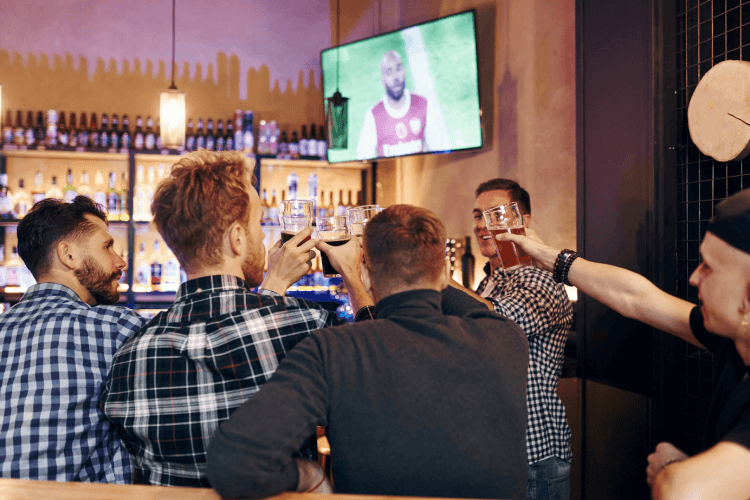
Once things get going, the game does a lot of the work.
Big plays, reactions, shared moments. That’s why people came in.
Around that, the job is simple. Keep things clean. Make it easy to follow. Let the game lead.
Games come in waves. Big moment, then a reset.
People turn to each other. Talk about the play. Debate a call. Order another drink.
That’s not a problem. That’s the experience.
Your job is to make sure that when they look back up, the room pulls them right back in.
What to actually do:
- Lock your main screens to the game. No switching, no confusion
- During breaks, rotate in quick-hit content. Stats, replays, promos, anything relevant
- Keep audio consistent. No sudden drops, no competing sound sources
- Avoid overcorrecting. Don’t blast music or clutter screens during short pauses
After the Game Is Still Part of the Night
The game ending isn’t the end of the night. It’s the decision point.
Stay for another round or close out.
If nothing changes, you can watch it happen. People finish their drink, glance around, and start settling their tabs.
The bars that hold people don’t let it land like that. The room shifts right away. Music comes back with purpose. Screens move to something worth watching.
That’s where the extra round comes from.
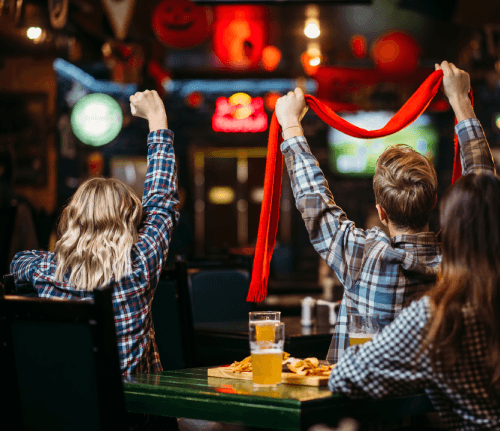
What to actually do:
- Switch playlists immediately. Don’t wait 10 minutes
- Move screens to highlights or “what’s next tonight” within 60 seconds
- Turn TVs that aren’t needed into atmosphere. Music videos, branded content
- Give staff a simple rule: post-game = re-engage the room, not clean up yet
The Takeaway
You don’t need to reinvent game night.
You need to control three moments:
- Before the game starts
- The breaks during it
- The first five minutes after it ends
That’s where the difference is.